This article is part of a series spotlighting members of the Circular Electronics Initiative, exploring how organizations are driving circularity in the electronics sector. In this edition, Javier Martínez Zavala from Consuprint shares insights into their approach to sustainable IT services.

A brief introduction to Consuprint sustainable IT services
Consuprint Sustainable IT Services, based in Viladecans, Spain, is a company specializing in comprehensive technology management services with a sustainability-focused approach since its founding in 2001. Our mission is to help businesses and organizations reduce the environmental impact of their electronic equipment by applying circular service models based on repair, refurbishment, and reuse as core pillars to extend product life.
We aim to generate a positive impact not only for our clients but also for collaborators and the broader environment. We firmly believe that sustainability and technology can coexist and strengthen each other. Technology should not be an obstacle to sustainability but a key tool to drive it. That is why we actively promote reducing environmental impact and sustainable practices throughout the supply chain across Europe.
Our role in the electronics lifecycle
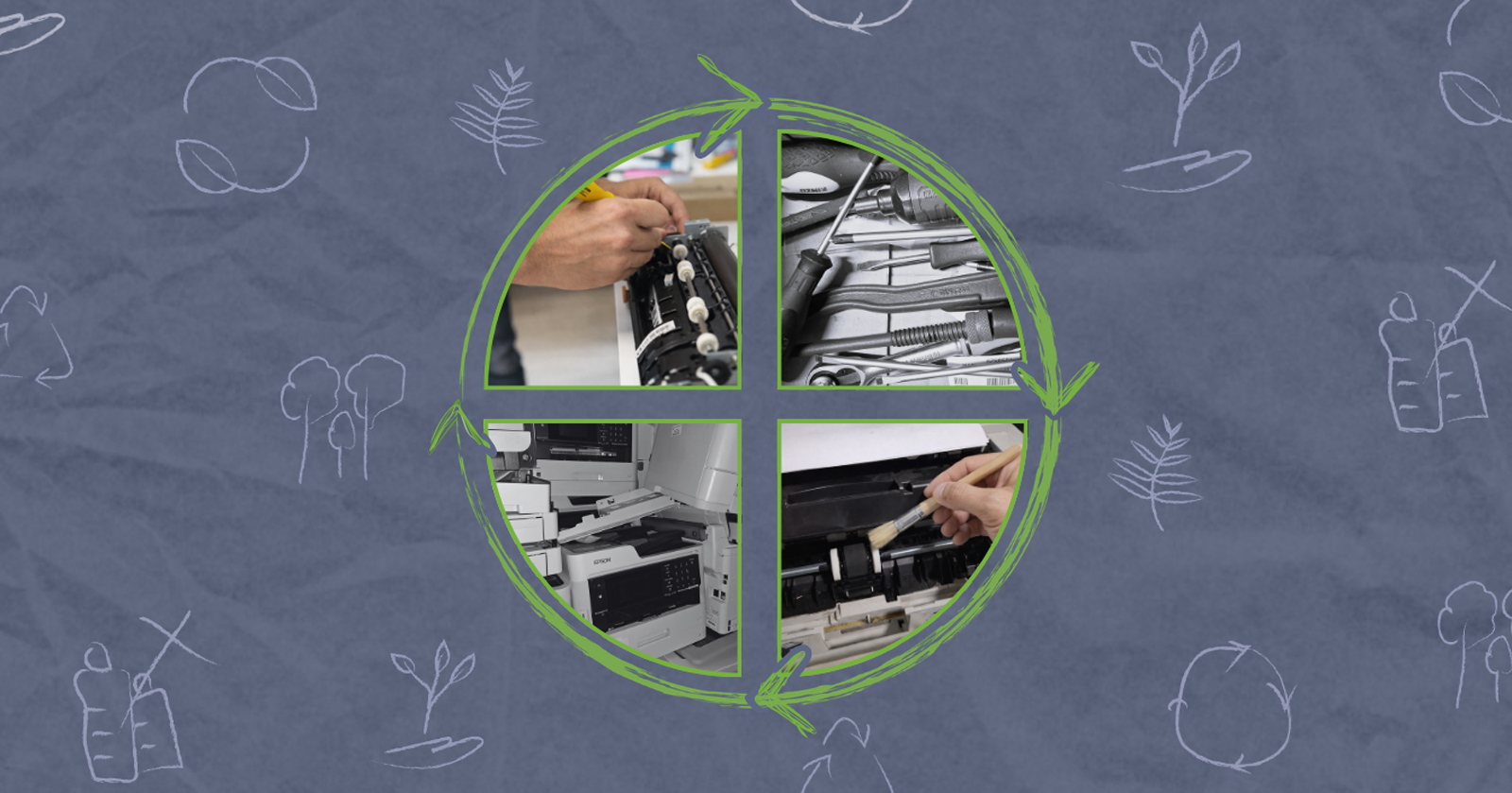
Consuprint operates directly at various stages of the electrical and electronic equipment lifecycle, integrating technical services with environmental and climate objectives. Through evaluation, repair, refurbishment, and redistribution processes, we extend the useful life of devices and significantly reduce electronic waste.
As part of our comprehensive solutions, we also manage used consumables, including OEM, remanufactured, or expired cartridges, always prioritizing their reuse, recovery, or responsible treatment whenever possible. This approach allows us to close the electronics loop, minimizing waste and maximizing the value of each resource.
How we enable circularity
Circularity is embedded across nearly all our services. We provide end-to-end solutions across IT services, printing, logistics, and consulting, always with the goal of advancing a more responsible model for electronics by optimizing the selection and application of solutions.
We guide clients in choosing equipment and advise on more durable, repairable, and efficient options. We provide repair services, spare parts supply, and preventive maintenance, returning devices to optimal performance levels while aligning all operations with European environmental regulations.
Our consulting and environmental training division integrates this approach, offering regulatory advice and helping organizations understand and apply circular economy principles to their technology management.
We collaborate with multiple entities, including national authorities and NGOs, on regulatory and training initiatives.
This model is further strengthened through collaboration with our partner companies (The Turbon Group, Ecobox, and Printer Phoenix), which play a key role in achieving our circularity objectives. Through these partners, we promote the commercialization of remanufactured consumables and parts, sustainable collection and treatment of used consumables, as well as the refurbishment and resale of second-life equipment. Together, they form an ecosystem aligned with our vision to close the electronics waste loop effectively and responsibly.
Circularity in practice: a real-world example
A concrete example of how we apply circularity as a main circular hub on the frame agreement with the Department of Health, which involves controlling and managing more than 25.000 thousand printing devices and associated systems. At least 20% of the installed equipment has undergone circularity processes, ensuring that it can face a new life cycle.
This approach enables strict collection control, measurement, facilitates recovery and reuse whenever possible, and ensures responsible treatment when recovery is not possible. It also helps prevent improper practices, reinforcing safety and compliance with European standards.
Managing this contract alongside circular processes reinforces our commitment to closing the loop on printing consumables and devices, delivering transparency, security, and responsibility while enabling our clients to achieve their sustainability goals.
Key insights and future outlook
Each year, enormous amounts of electrical and electronic waste are generated, and projections indicate that by 2040 its environmental impact may surpass that of the entire global transportation sector, largely due to patterns of mass consumption and production.
In the printing sector, the situation has worsened because of the massive irruption of non-compliant, dangerous cartridges. Some 140.000 tons of dangerous and illegal waste are dumped on Europe annually, representing a cost of 1 to 1,5 billion per annum.
At Consuprint, circular practices are key to addressing this challenge. Our work across various development areas focuses on extending device lifespans to the maximum, applying circular services based on recovery, reuse, reverse logistics, responsible management, and strict regulatory compliance. One thing we have learned over time is that collaboration is essential to make circularity a standard practice rather than a distinction in the technology sector.
Final reflections
Every intervention represents another step toward more responsible electronics. Initiatives such as those promoted by the Circular Electronics Initiative are critical to accelerating the transition to circularity, reducing electronic waste, and encouraging a more conscious and efficient use of resources. Yet effective market enforcement is vital, and we urge authorities to take action.